
Serving St. Louis Residential and Commercial Customers Since 1948
Every job done right the first time
Union-trained professional electricians
Meets all local electrical codes
Serving St. Louis since 1948
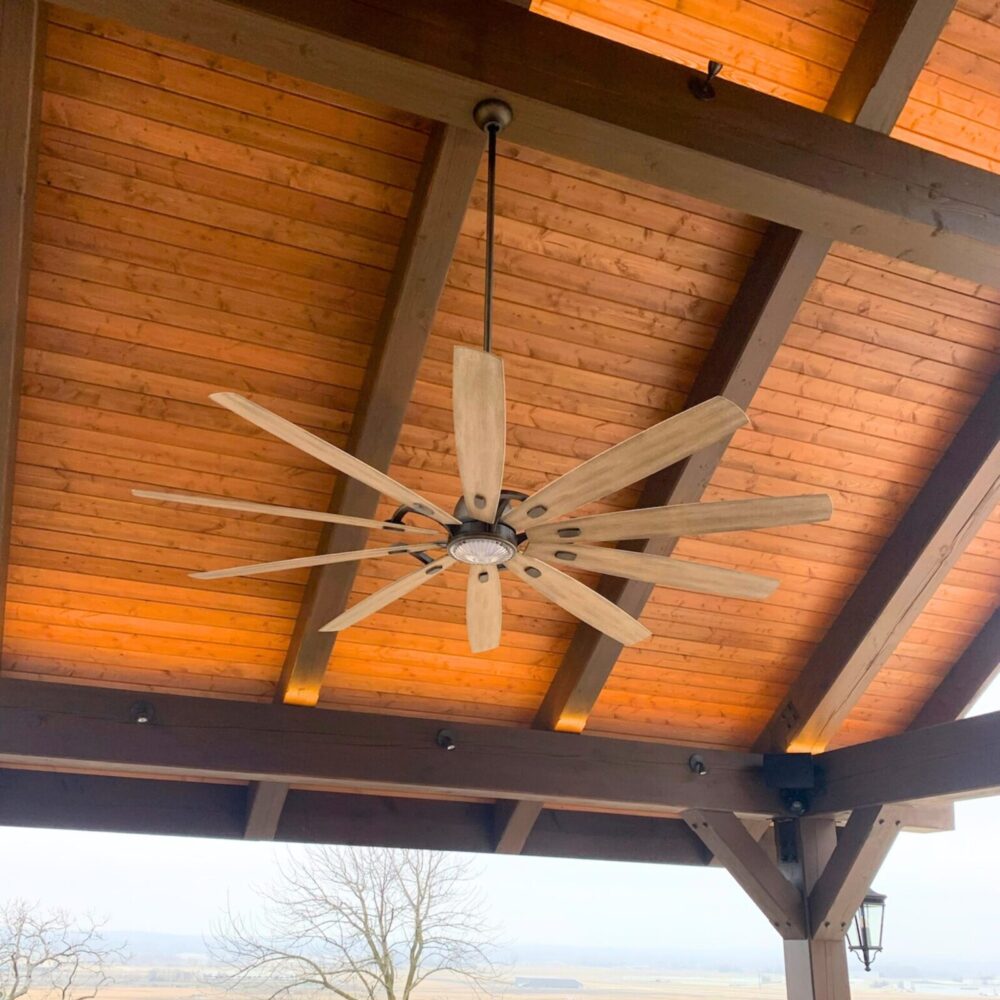
Installing a ceiling fan looks easy from the ground. Then you’re on a ladder, holding a 30-pound motor, looking at three wires that aren’t labeled, in an electrical box rated for a lightbulb. We do the parts you shouldn’t try on a Saturday afternoon: the wiring, the box swap, and the blade balance.
Common ceiling fan projects we install:
Every install meets National Electrical Code (NEC) standards. That means the right box rating and a real ground. The fan goes up tight enough on the bracket that it stops wobbling on day one. More on electrical safety at NFPA.org.
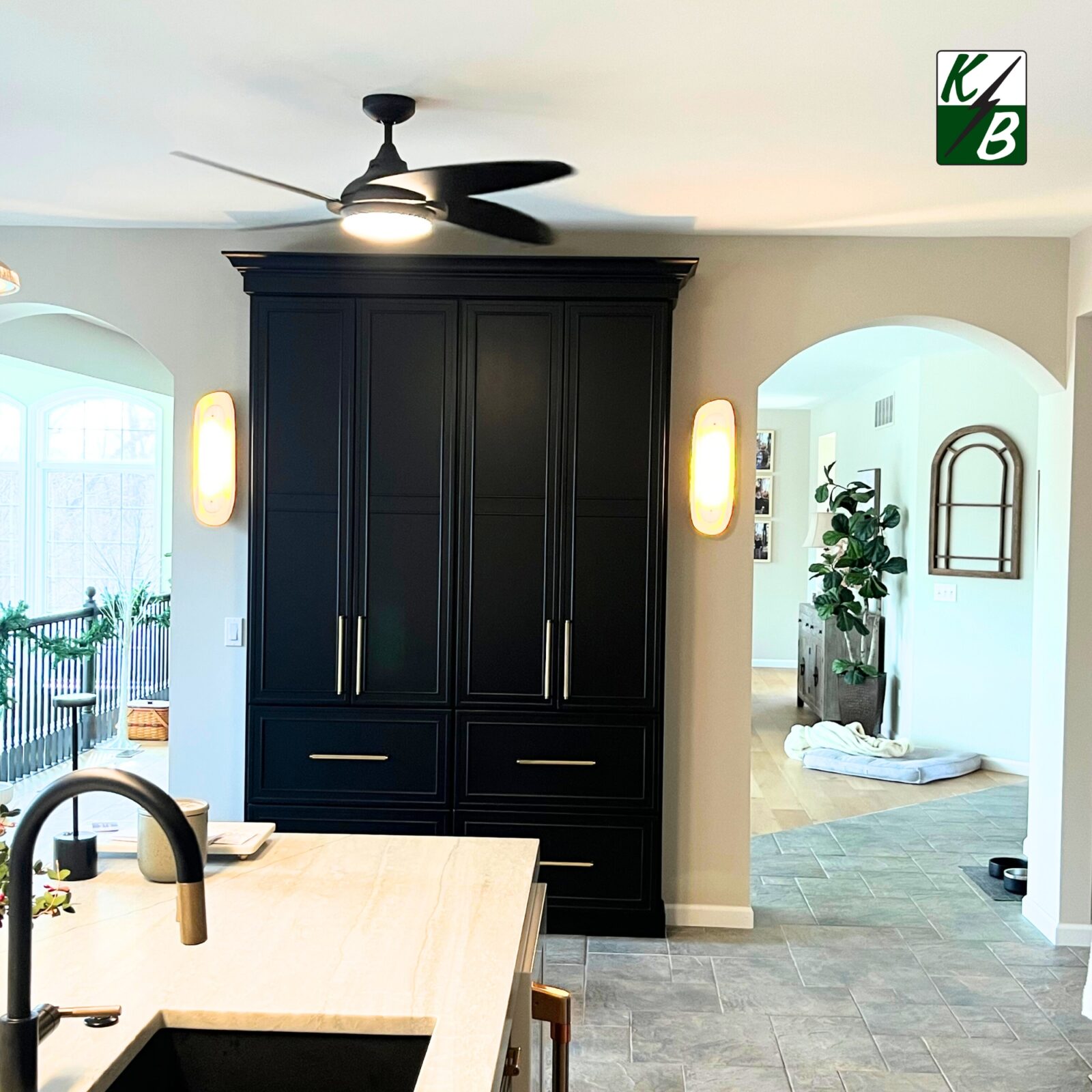
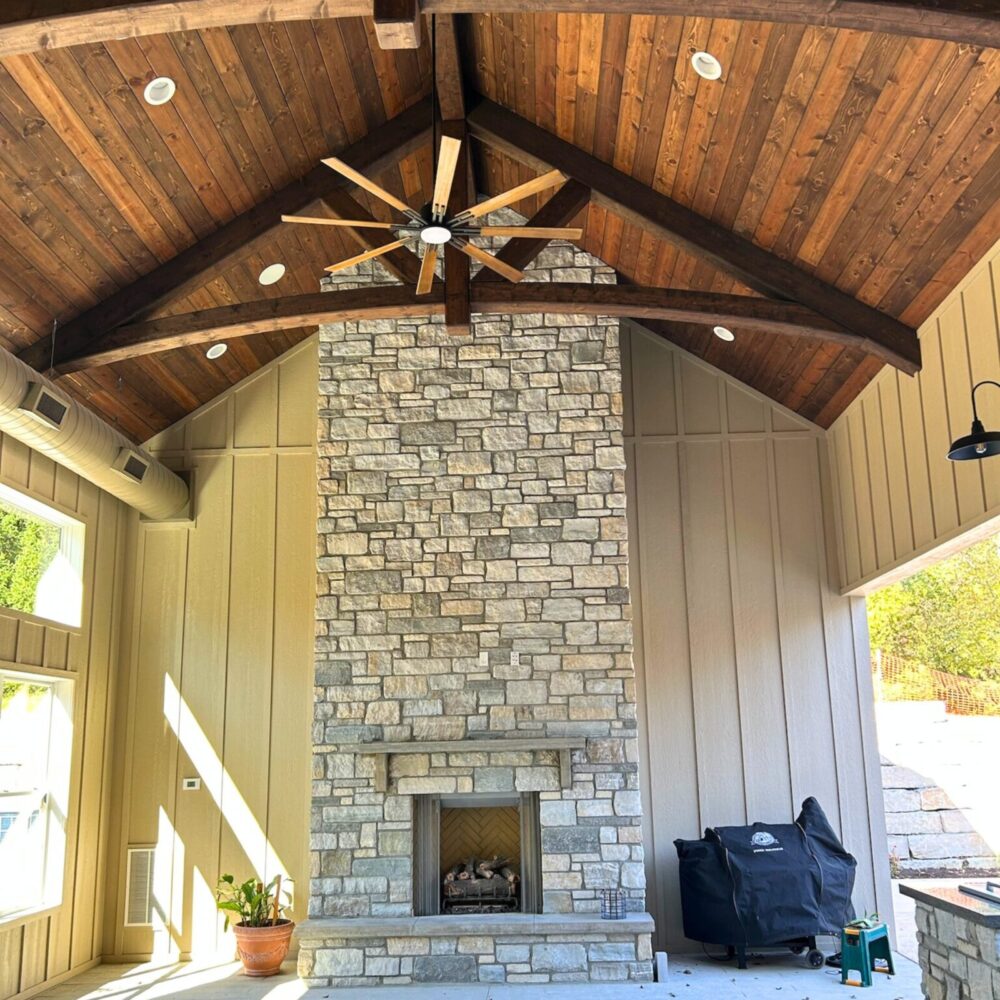
A ceiling fan installed correctly is quiet. It cools the room in summer and pushes warm air back down in winter. A fan installed wrong wobbles, hums, sparks at the canopy, and in the worst cases yanks itself out of the ceiling. What separates the two: the box rating and the blade balance.
Here’s what we do on every install:
Bedrooms, covered patios, 20-foot foyers. Same job, same result. The fan goes up on a rated box, wired to code, balanced quiet. For ways to cut cooling bills with the fan you already have, see Energy.gov.

EXCELLENTTrustindex verifies that the original source of the review is Google. Steve was friendly and professional, completed all tasks in a timely manner. Would use Kay Bee again for any electrical needs.Posted on GoogleTrustindex verifies that the original source of the review is Google. They did a great job. Came to the house right on time for the appointment. It did not take long to get someone to come over just a couple days for a nonemergency request. Pricing was very reasonablePosted on GoogleTrustindex verifies that the original source of the review is Google. Jake came out and did a fantastic job figuring out where my problem was and getting it fixed right away! KayBee is the only electrical company I’ve ever used and couldn’t imagine anyone else providing better service and pricing!Posted on GoogleTrustindex verifies that the original source of the review is Google. They do great work and I highly recommend them for any electrical issues you may have.Posted on GoogleTrustindex verifies that the original source of the review is Google. Excellent job!!Posted on GoogleTrustindex verifies that the original source of the review is Google. Beyond impressed and satisfied with Kay Bee Electric! They were kind, efficient, quick, knowledgeable, trustworthy and did a fantastic job. Corrected the issue without trying to sell us on much more costly work another company had insisted we “had to have” at the cost of thousands of dollars and Kay Bee fixed the issue to code for under $300. HIGHLY recommend!Posted on GoogleTrustindex verifies that the original source of the review is Google. I have used Kay Bee three different times and all have been great! We have had a variety of jobs done; total replacement of electrical panel to upgrade it, moved an electrical outlet to higher in the wall for tv, replaced four lights with wafer lighting, and updated all electrical boxes on our main floor). They take care of you in a couple of days and offer a good price. They brought all materials needed, and when I added more tasks, Scott called the main office and had the supplies delivered that day so he could complete the job. You can trust them to take care of you without killing the bank account. This last time, Scott came out and he did a super job. He has worked for the company for over 20 years, that says something about the company.
Planning a ceiling fan install? Most jobs are done in one visit. Get a free estimate or call (314) 837-3308 to schedule.
No. A ceiling fan needs a fan rated electrical box, sometimes called a brace box. It attaches either directly to a ceiling joist or to a metal cross brace between joists. Lightbulb boxes won't hold one. Fans vibrate, and a year or two of vibration can work the screws loose. Box swap is part of every install we do. We don't reuse the lightbulb box, even when it looks fine.
A standard wall dimmer is not rated for fan motors and will cause the motor to hum, overheat, or fail early — dimmers are built for resistive lighting loads, not inductive motor loads. If you want variable speed control, the fan needs its own fan-rated speed control: a wall-mounted fan controller, a remote/receiver kit installed in the canopy, or a smart fan control that separates the fan and light circuits. We check what's already run to the box, dual-switch, single-switch, or one hot only, before recommending which control option fits.
Sometimes. If there's already a light fixture where the fan is going, we can usually reuse the existing wiring once we've checked the gauge. If the room has no fixture, or you want dual switches so the fan and light kit work separately, then yes, we'll pull new cable from the switch box up to the ceiling.